Welcome to discuss your project requirements.
Welcome to discuss your project requirements.
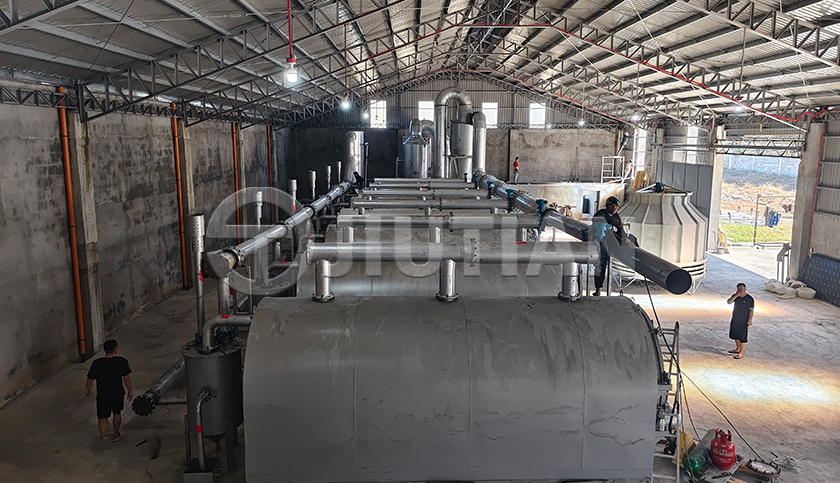
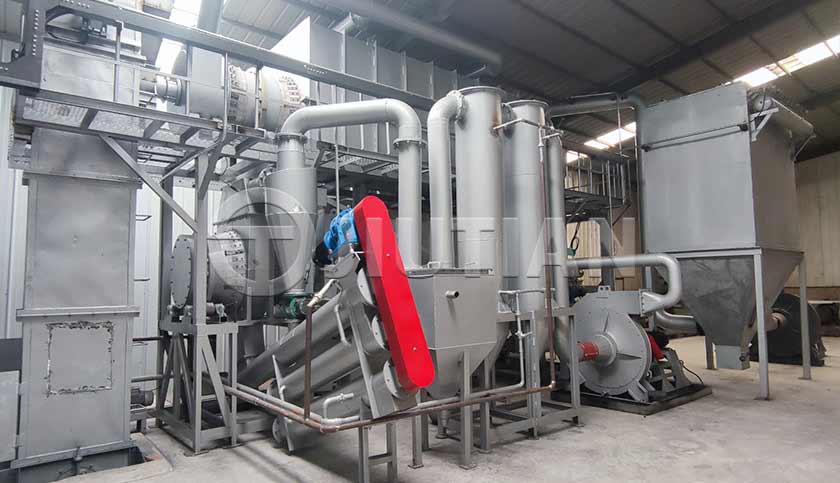
A food waste biochar production line, built specifically for a Korean client, has successfully completed production and testing. The equipment operates stably, and its output of 300 kilograms per hour fully meets design expectations and satisfies client requirements.
1. Pre-treatment
Waste Sorting and Collection: South Korea implements a strict "pay-as-you-go" policy, requiring residents to sort their food waste and use dedicated garbage bags or smart recycling bins. This ensures a high purity of raw materials entering the plant.
Impurity Removal: Collected food waste undergoes initial treatment to remove non-biodegradable impurities such as metals, plastics, and glass.
Dehydration and Drying: Food waste has a high moisture content (typically exceeding 80%). Before pyrolysis, mechanical dehydration and thermal drying are necessary to improve processing efficiency and reduce energy consumption.
Crushing and Homogenization: The waste is crushed into uniformly sized particles to ensure even heating during the subsequent pyrolysis process.
2. Pyrolysis
Pyrolysis (Mainstream Process): The pre-treated dry material is fed into a pyrolysis reactor. It is heated to a specific temperature (300°C-500°C) under anaerobic or low-oxygen conditions. Organic matter undergoes thermochemical decomposition, producing biochar (solid product), bio-oil (liquid product), and syngas (gaseous product).
3. Resource Recycling and Utilization
Biochar Products: Finished biochar is mainly used as a soil conditioner (improving soil fertility, water retention capacity, and carbon sequestration), solid fuel, or adsorbent material.
Energy Recovery: Syngas and bio-oil produced during pyrolysis can be recycled to provide heat energy for the plant, achieving energy self-sufficiency. Excess energy can even be used for power generation or heating.
Wastewater Treatment: Wastewater generated during pretreatment and desalination processes undergoes purification treatment.
The core principle of the Korean food waste biochar plant is: through high-temperature pyrolysis technology, high-moisture food waste is converted into stable biochar, recyclable bio-oil, and syngas, achieving thorough waste reduction, harmlessness, and resource recovery.
Zhengzhou Jiutian Machinery is a professional machine manufacturer with 20+ years of experience in China.
Jiutian focuses on continuous charcoal making machine, horizontal carbonization furnace, vertical carbonization machine, activated carbon machine, briquette machine, drying machine, etc.
Sincere service, looking forward to win-win cooperation with domestic and foreign customers. Welcome to discuss customizing your solution.
According to the customer's actual requirements, raw materials and use of customized solutions
Own production base, strict production standards and processes, professional quality control.
Engineers track the entire service, install and commissioning the equipment to ensure successful operation.
Provide technical support, technical service, technical training, after-sales service.