Welcome to discuss your project requirements.
Welcome to discuss your project requirements.
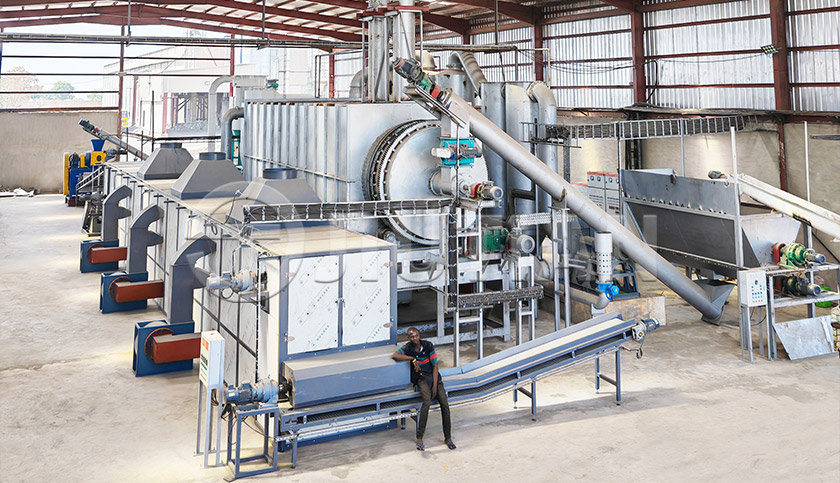
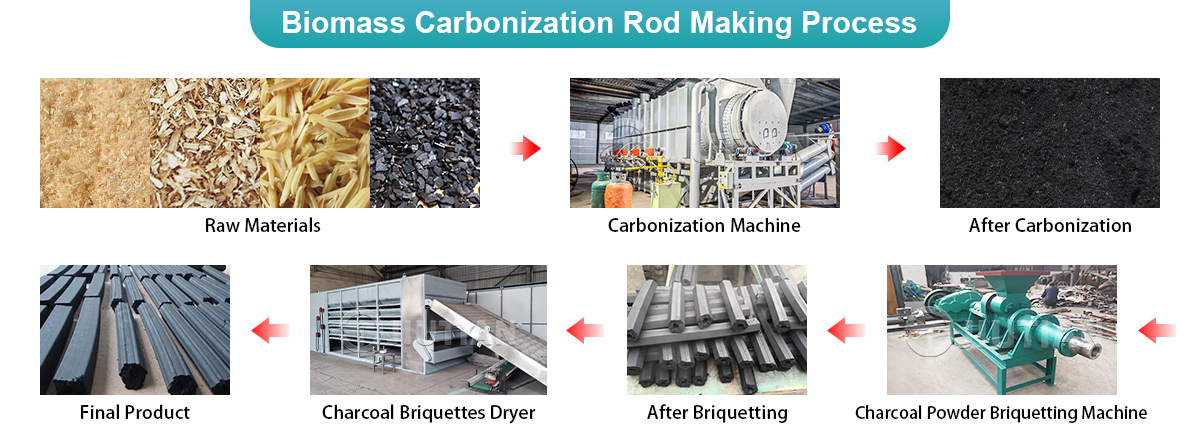
Charcoal briquette production line is a process of making charcoal briquettes from raw materials such as logs, bamboo, branches, agricultural waste, etc. through crushing, carbonization, briquette making, drying. Charcoal briquettes have the advantages of high density, small volume, good combustibility, smokeless, odorless and non-toxic. Charcoal briquettes have a wide range of applications and are widely used in heating, barbecue and other industries. In the industrial field, they are alternative raw materials for coal and heavy oil. They are also used as supplementary fuel for boilers because their density is close to that of coal and their calorific value is 5500-7000 kcal/kg, but their ash content is significantly lower than that of coal. Jiutian Machinery is a professional charcoal briquette machine making company with its own factory and R&D team, providing equipment at factory prices and professional services.
Suitable to process wood, coconut shell, walnut shell, apricot shell, hemp pole, sawdust, rice husk, bamboo, coffee grounds, palm shell and other materials into charcoal briquette.
Generally, the entire production process can be divided into four parts.
1. Crushing
The raw materials for making charcoal briquettes can be wood, branches, bamboo, sawdust, coconut shells, rice husks, peanut shells, etc. After a certain amount of raw materials are prepared, they are crushed in a crusher to less than 5mm. However, if the raw materials are already in powder form, such as sawdust or bamboo powder, this step should be omitted.
2. Carbonization
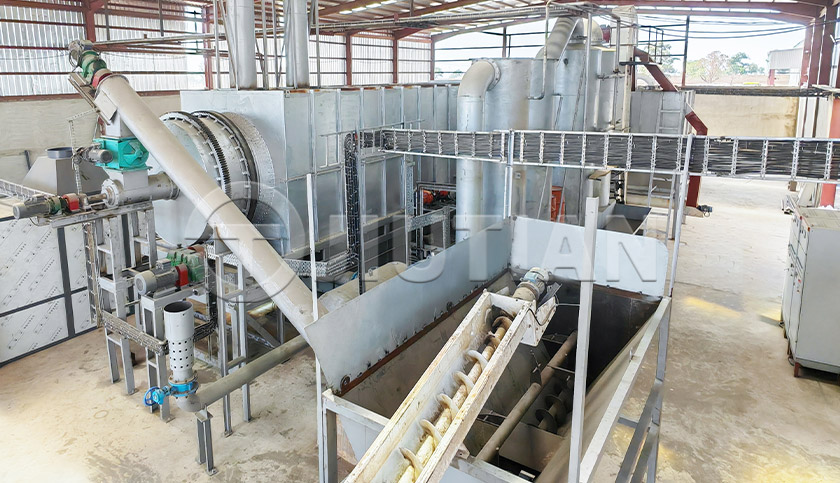
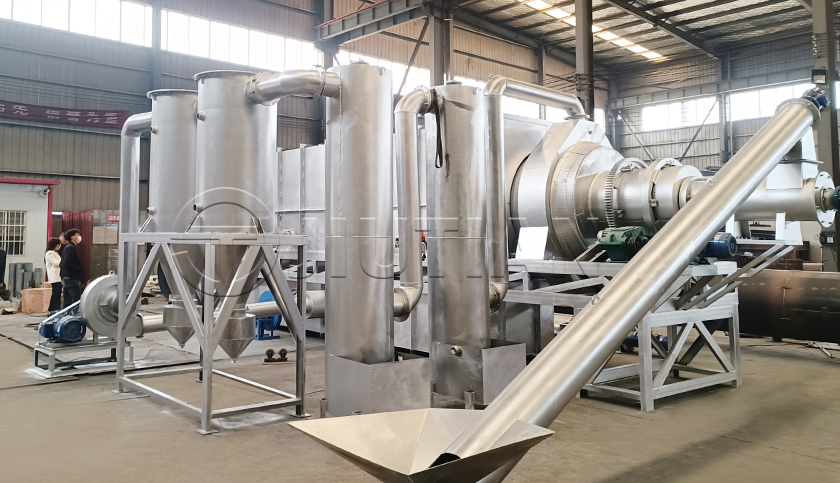
Put the crushed raw materials into a biomass carbonization machine, and the raw materials will be dry distilled and carbonized without oxygen under high temperature conditions.
3. Briquette making
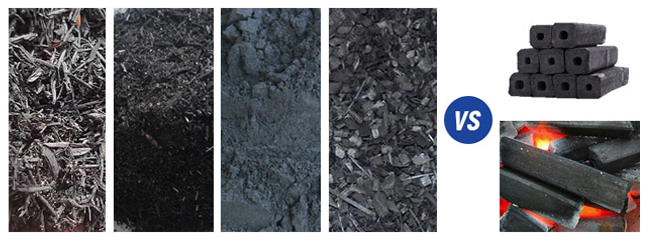
The charcoal powder obtained after carbonization is sent to charcoal powder briquetting machine and compressed into a predetermined shape of charcoal briquettes (cube, small circle, square, oval, pillow and strip) with a certain strength.
4. Drying
After the charcoal briquettes are dried by the charcoal briquette dryer, they can be stored or packaged.
| Model | Diameter(mm) | The drum length(m) | Carbon capacity(kg/h) | Drum speed(rpm) | Dimension(m) |
| JTTJ1010 | 1000 | 10 | 100-200 | 1.5-2.5 | 10.0*1.7*2.8 |
| JTTJ1210 | 1200 | 10 | 200-300 | 1.5-2.5 | 10.0*2.0*3.0 |
| JTTJ1410 | 1400 | 10 | 400-500 | 1.5-2.5 | 10.0*2.2*3.2 |
| JTTJ1612 | 1600 | 12 | 600-800 | 2.0-3.0 | 10.0*2.4*3.5 |
| JTTJ1912 | 1900 | 12 | 900-1100 | 2.0-3.0 | 12.0*2.8*3.8 |
| JTTJ2212 | 2200 | 12 | 1200-1500 | 2.0-3.0 | 12.0*3.2*4.2 |
| JTTJ2512 | 2500 | 12 | 1600-2000 | 2.0-3.0 | 12.0*3.5*4.5 |
| JTTJ3012 | 3000 | 12 | 2200-2600 | 2.0-3.0 | 12.0*4.0*5.0 |
| JTTJ3612 | 3600 | 12 | 3000-3800 | 2.0-3.0 | 12.0*4.6*5.6 |
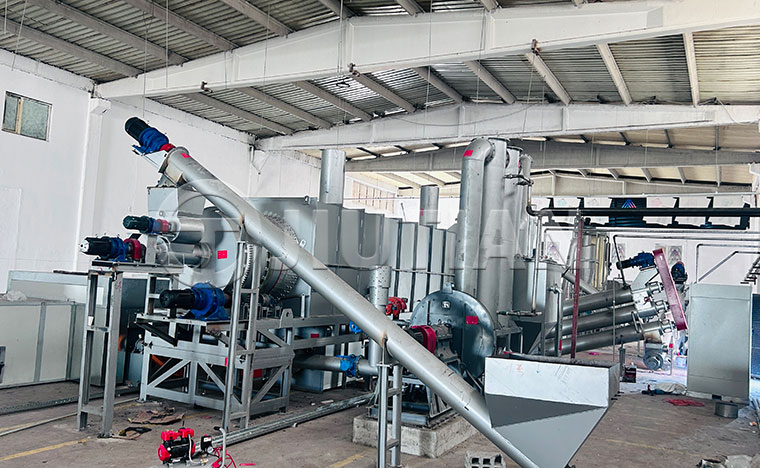
Capacity: 250kg-300kg/h
Location: Turkey
Configuration: Hookah charcoal or BBQ charcoal used as fuel
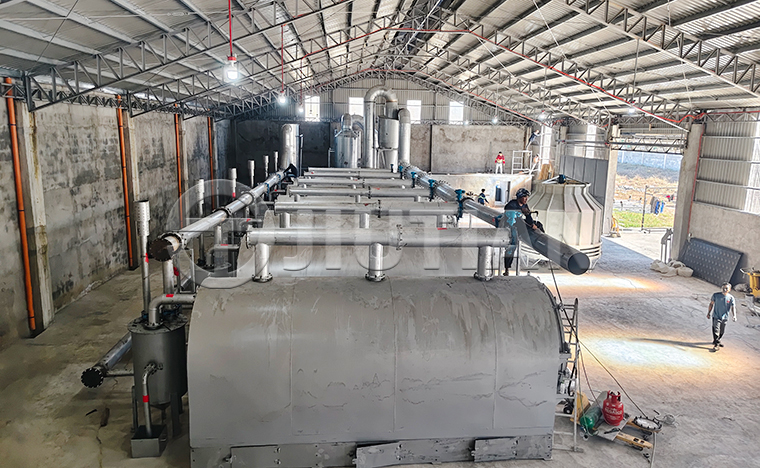
Capacity: 10t/day
Location: Philippine
Configuration: as coconut shell charcoal
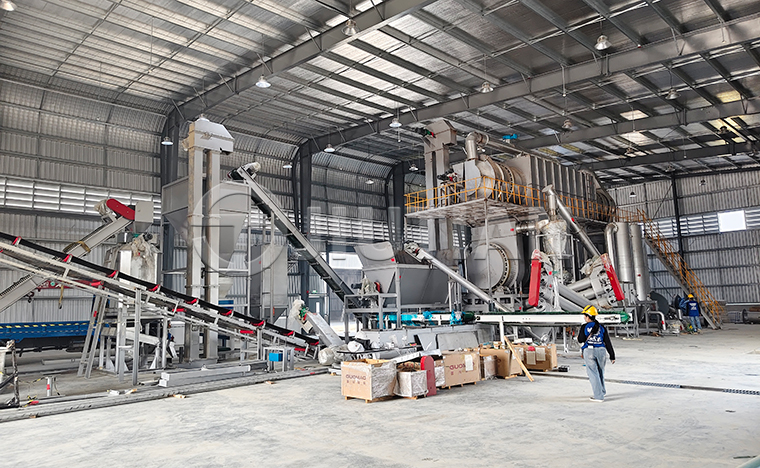
Capacity: 1.4-1.7t/h
Location: Thailand
Configuration: as biochar
According to the customer's actual requirements, raw materials and use of customized solutions
Own production base, strict production standards and processes, professional quality control.
Engineers track the entire service, install and commissioning the equipment to ensure successful operation.
Provide technical support, technical service, technical training, after-sales service.